The Strategic Case for Human-Centered Operations: Why Your Small Business Doesn't Need an AI Agent
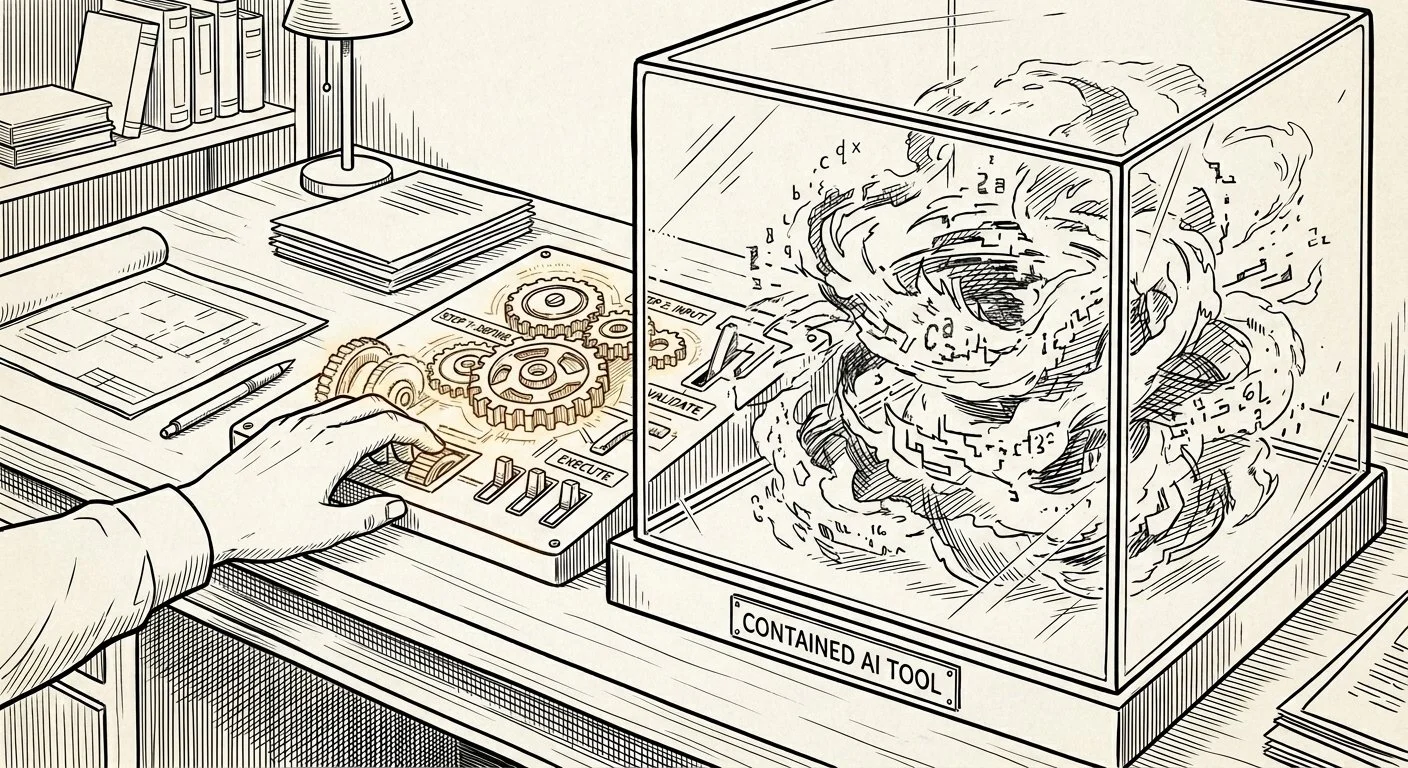
Everywhere you look in 2026, there’s a new pitch for the "self-operating business." Every SaaS provider is rushing to bolt an autonomous agent onto their platform, promising that their new AI sidekick will handle your invoicing, clear your inbox, and manage your customer support while you sleep.
If you’ve been feeling a distinct sense of AI fatigue, you aren’t alone. You’re actually being smart.
It’s hard to ignore that there has been an obvious trend in the industry recently toward "agentic" software—AI systems designed not just to suggest, but to take autonomous action across your business stack. But here is the reality from under the hood: for the vast majority of small business owners, an AI agent isn't a silver bullet. It’s an expensive, high-maintenance layer of operational debt.
Debunking the "Agent-Washing" Trend
First, let’s talk about "agent-washing." Much like the greenwashing of the early 2020s, many companies are slapping an "AI Agent" label on standard, rule-based features to justify a price hike.
Before you commit your budget to a new suite of "autonomous" tools, ask yourself: Does this system actually require a Large Language Model to reason through a problem, or is it just a glorified "if-this-then-that" script? Often, the answer is the latter. You don’t need an AI agent to send an automated confirmation email; you need a stable, deterministic workflow.
The Hidden Risks of Autonomy
The leap from generative AI (chatbots that write emails) to agentic AI (systems that execute tasks) is massive. When you give an AI agent the "keys to the castle" to interact with your APIs, databases, and third-party apps, you introduce significant vulnerabilities:
Financial Unpredictability: Unlike traditional software with flat subscription fees, AI agents are often tethered to token-based pricing that scales with the complexity of their "reasoning loops." If an agent gets caught in a recursive error or a complex multi-step task, your "efficiency" tool can suddenly become a budget-draining liability.
Shadow AI and Security Blind Spots: When your team starts deploying autonomous agents without centralized oversight, you lose control over your data. These agents can ingest sensitive client information or interact with external APIs in ways that bypass your established security protocols.
The Execution Layer Problem: While the underlying AI model might be sophisticated, the "execution layer" is a primary target for the 2025 OWASP Top 10 for LLM Applications. These risks—ranging from prompt injection to insecure plugin design—mean that without rigorous security, an external actor could manipulate your agent into unauthorized actions, like deleting database records or sending fraudulent invoices.
Why Most AI Projects Fail for SMBs
Industry reports from 2026 estimate that a high percentage of AI initiatives fail to reach their intended ROI, often because companies integrate AI into environments lacking the necessary organizational readiness or data structure. At Rifful, we address this by decoupling knowledge from your workspace through our Knowledge Access Layer (KAL), ensuring your AI operates on a well-indexed, citation-grounded knowledge library rather than unstructured data.
If you attempt to automate a process that hasn't been clearly defined, you aren't creating efficiency, you are simply automating chaos at a higher speed. AI agents are amplifiers. If your internal data is fragmented, inconsistent, or unverified, an autonomous agent will only compound those errors throughout your ecosystem.
Furthermore, the "Day-2" reality of AI operations is an absolute nightmare. The initial setup might look like magic, but maintaining these systems—monitoring for drift, fixing broken integrations, and managing API updates—requires a level of technical maturity that most small, agile teams are better off investing elsewhere. This doesn't mean AI has no place in a lean business—it just means the current trend of "autonomous agents" is the wrong entry point.
The future isn't about handing the keys to a black-box bot, but about "Human-in-the-Loop" AI. Think of it less as an autopilot and more as a powerful tool in your dashboard: you trigger the AI only when you need it, through intentional UI/UX choices rather than letting it roam free in your backend. This controlled approach, which we champion at Rifful, lets you keep the precision of deterministic systems while using AI as a surgical tool for specific, high-value tasks.
The Superior Alternative: Deterministic Automation
If you want to scale your business without the unpredictability of AI, you should embrace deterministic automation. That said, don't write off AI entirely; the goal is to shift from "autonomous agents" to controlled AI experiences. By using UI/UX triggers—where you decide when to call on an AI model for a specific task—you retain the reliability of a deterministic foundation while gaining the power of AI exactly where it adds value.
Deterministic systems follow fixed, pre-programmed logic. They do exactly what they are told, every single time, without "reasoning" or "hallucinating." They are the backbone of a robust, human-centric small business.
Why Deterministic Tools Win:
Reliability: You control the logic. If a process fails, it’s because the rule was flawed, which means you can fix it immediately. You don't have to guess why a model made a specific, weird decision.
Data Control: When you use deterministic, rule-based platforms, your proprietary business data remains private. You aren't feeding your customer interactions into a massive black box to train someone else’s model.
Predictable Cost: You know exactly what your monthly overhead is. No surprise token usage bills, no infinite loops, just clean, predictable operations.
The Path Forward: A Strategic Framework
Before you jump into your next AI agent trial, try testing your current operations against this simple logic check:
Identify the Pain: Pinpoint a high-repetition, low-judgment task. If the task is complex or requires nuance, keep it human.
Map the Logic: If you cannot explain the process in plain English to an intern, you cannot automate it. Document the steps clearly. This creates the "schema" for your business.
Build Deterministically: Use rule-based tools to build the logic flow. Make it stable. Make it predictable.
Add AI You Control: Once your core workflow is running perfectly, then introduce AI components—like a simple LLM experience that can summarize a meeting transcript—as a finishing touch, not the foundation.
Your business does not need a "self-operating" agent to compete in 2026. What it needs is a solid, well-documented foundation that allows you and your team to focus on the human expertise that AI can’t replicate. By focusing on structural, deterministic improvements, and targeted AI that remains in your control, you reclaim your time, protect your data, and maintain the personal touch that built your business in the first place.
Behind the Scenes : Using Rifful to Create this Blog Post
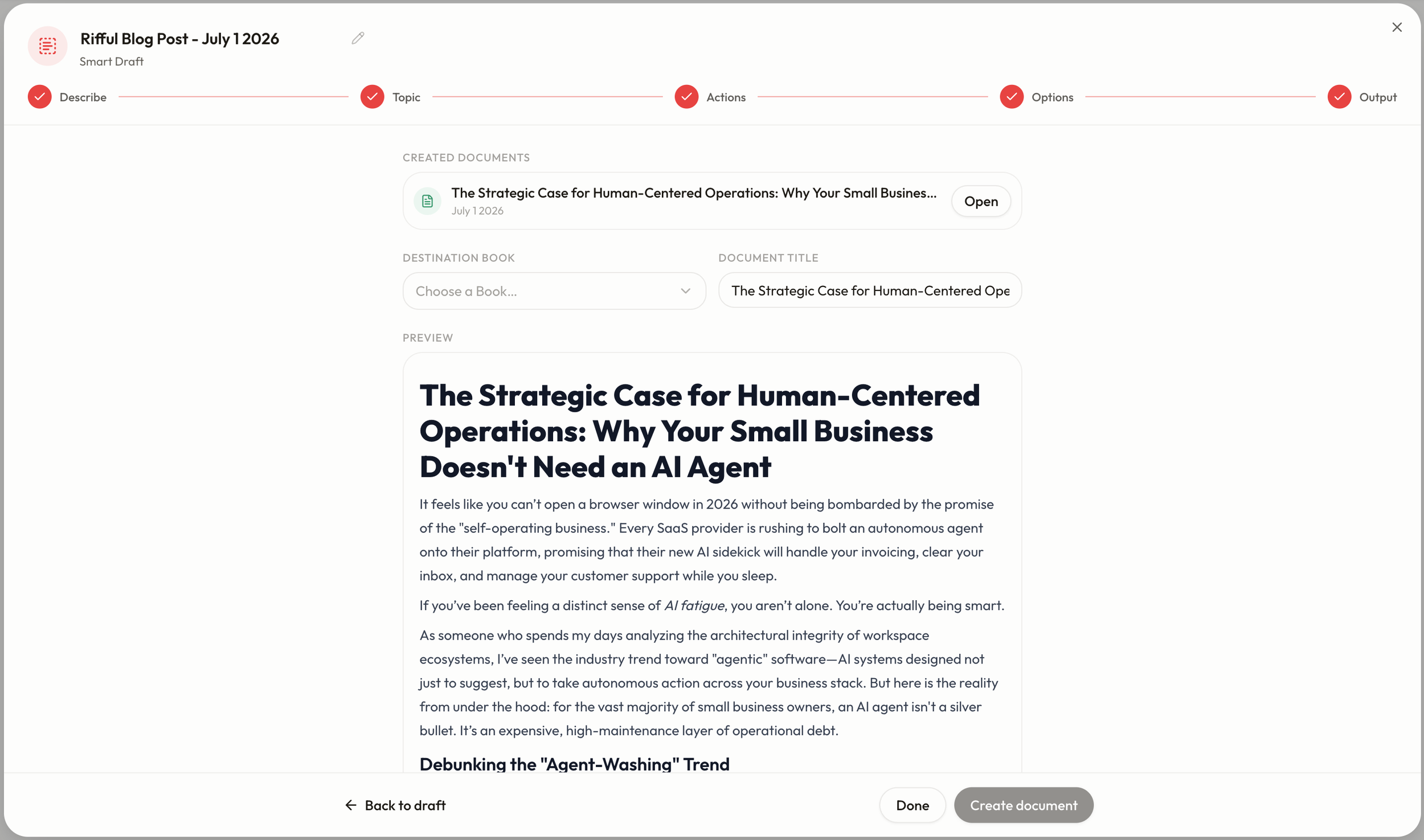
#1) Research and create a first draft with Riffuls “Smart Draft”
The first draft of this post was researched and generated using the Smart Draft experience
First, we described the post we wanted to create and let the AI provide suggested topics
Second, Actions were setup to have AI research the web and extract key insights and SEO for the blog topic
Finally, an initial draft document was created and saved to our workspace
#2) Fine-tune and polish with Riffuls “Smart Write”
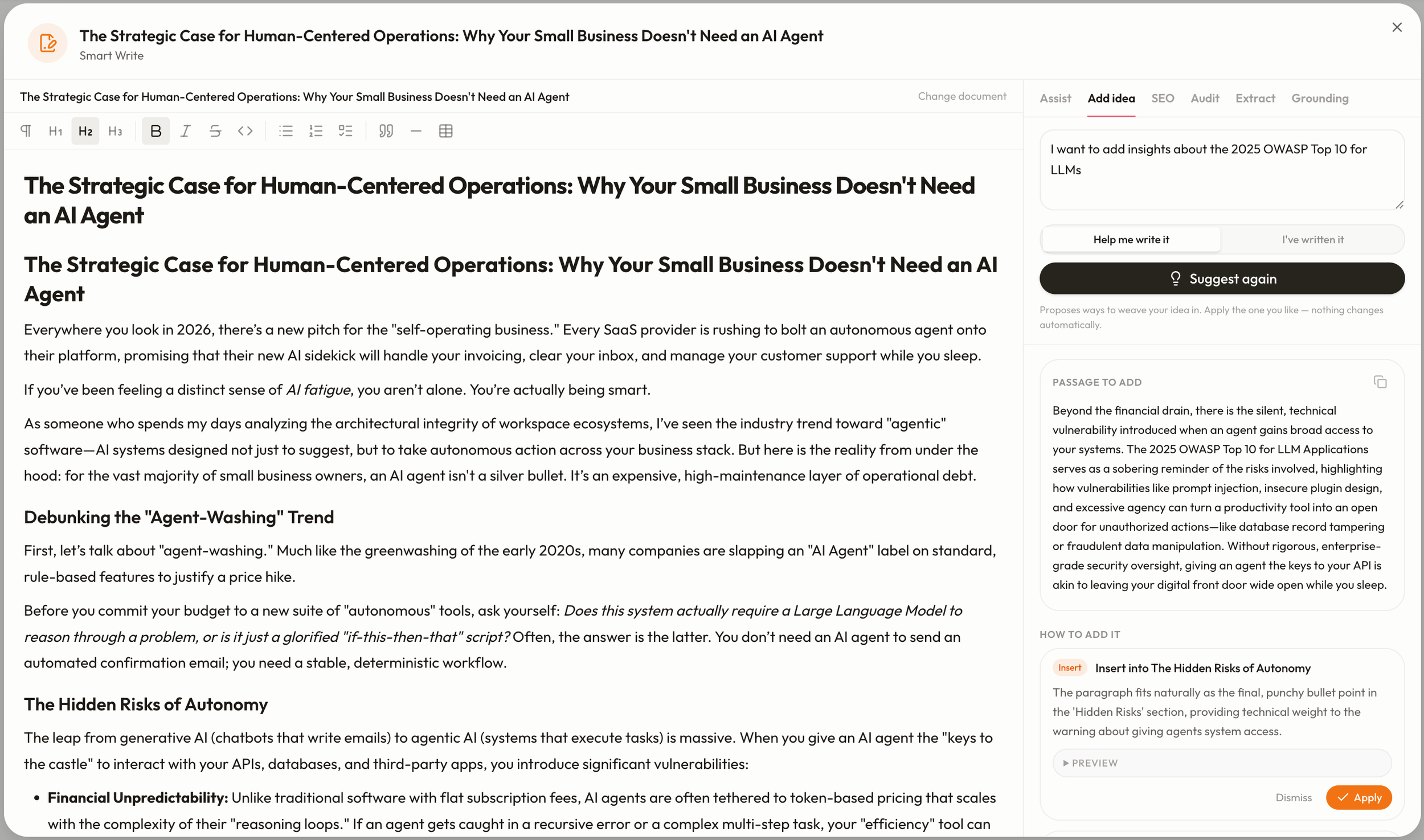
Once we had our initial draft it was time to polish and make it our own with the Smart Write experience.
First, a manual pass to add anything missing, and re-write sections that we didn’t quite like
Second, we used the AI to make sure claims were fact checked and post was SEO optimized
Finally, an improve and polish pass with the AI to make sure it all sounded just right
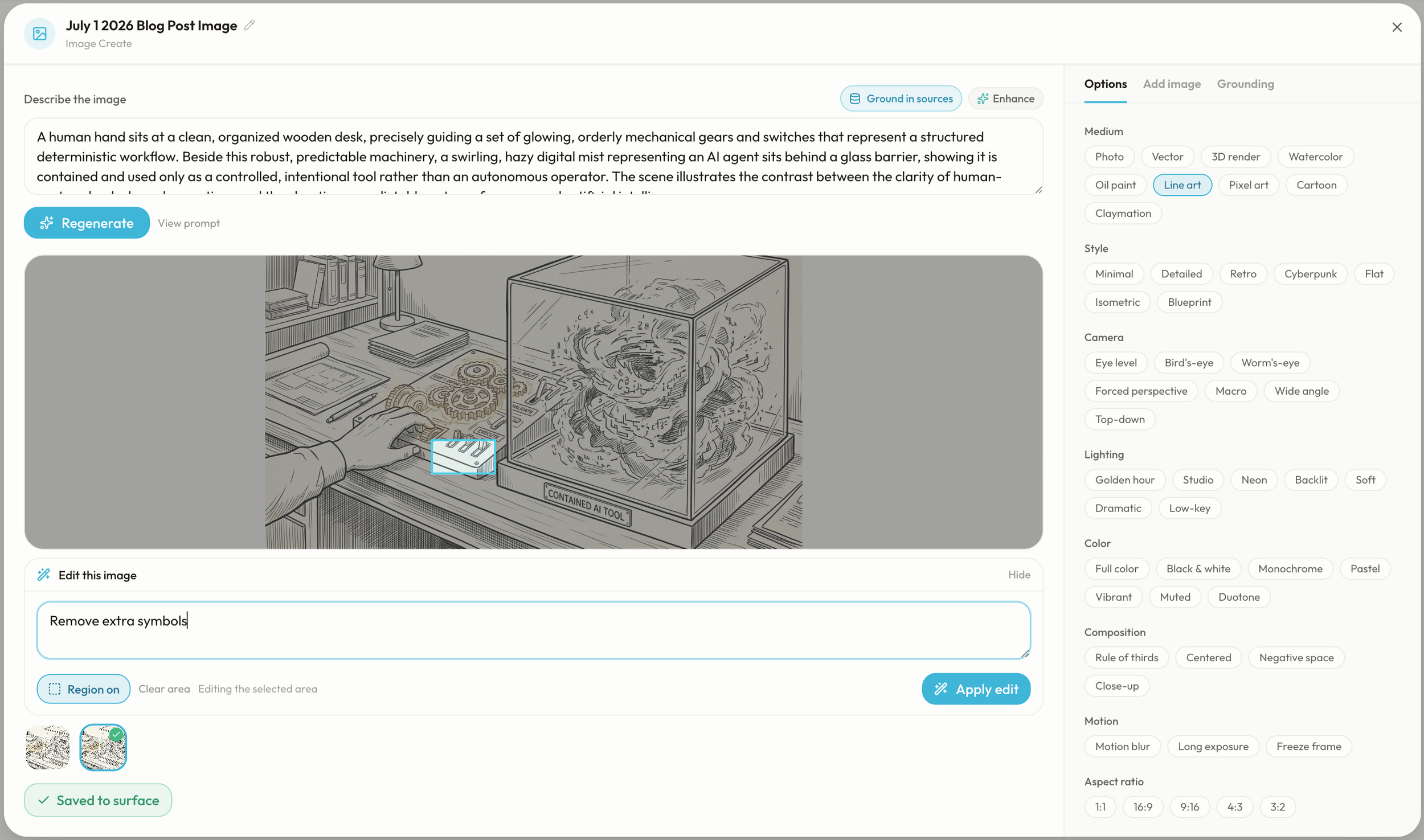
#3) Create a relevant image with Riffuls “Image Create”
Finally, we created a header image that fit the post with the Image Create experience.
First, we added the blog to the source list to give the AI the right context
Second, we gave a brief description of the image and let the AI ground its own prompt in our blog source
Finally, we generated and tweaked a few examples until we got what we were after